

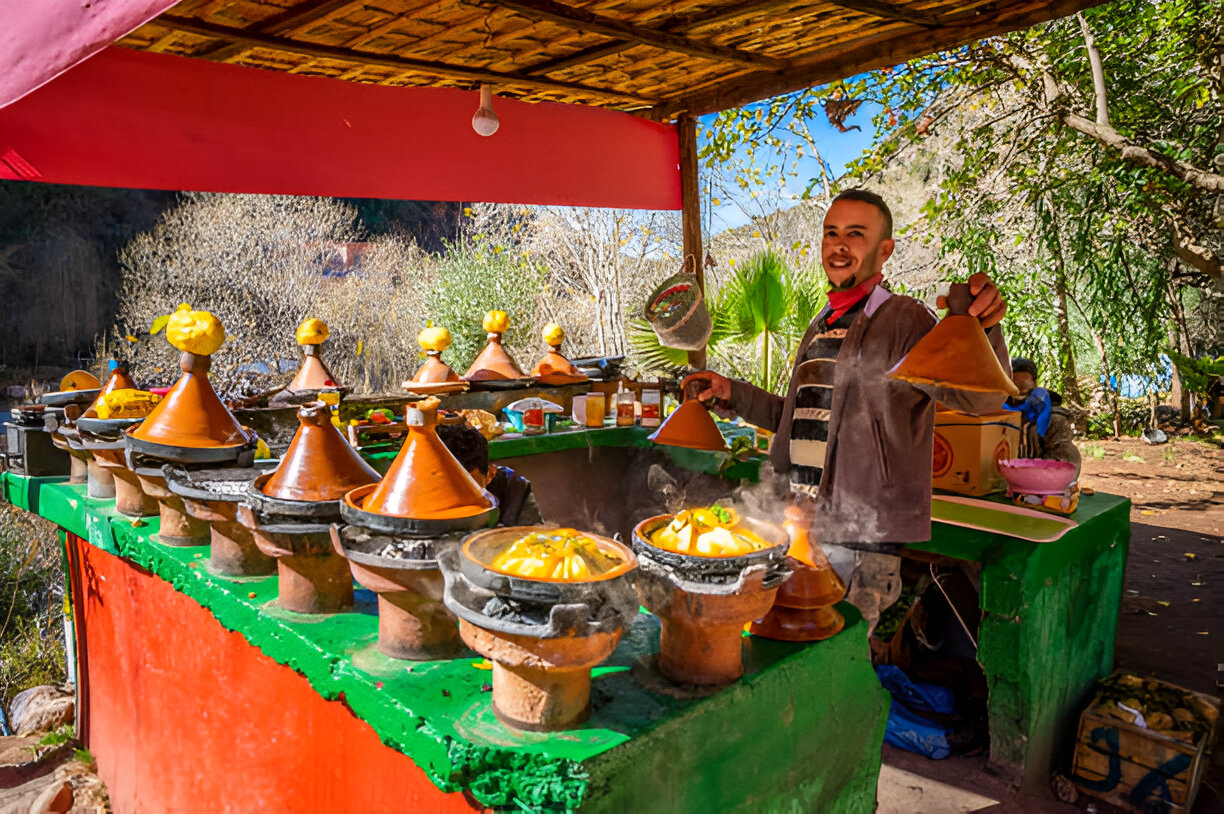

Savoring the Flavors of Morocco: A Gastronomic Adventure
Moroccan cuisine is a delightful fusion of Berber, Arab, and Mediterranean influences, offering a tantalizing array of flavors and dishes. Here’s a glimpse into some of Morocco’s most iconic and delicious culinary delights:
1. Tagine:
- Versatile Dish: The tagine is a slow-cooked stew typically prepared in a conical earthenware pot. It can be filled with a variety of ingredients, including meat, vegetables, and spices.
- Popular Variations: Some popular tagine fillings include lamb with prunes, chicken with lemon and olives, beef with vegetables, and vegetarian options like vegetable tagine or lentil tagine.
- Cooking Techniques: Tagines are often cooked over low heat for hours, allowing the flavors to meld and the meat to become tender. The conical lid of the tagine helps to trap moisture and steam, creating a flavorful and tender dish.
- Regional Variations: Tagine recipes can vary depending on the region, with different ingredients and cooking techniques used. For example, in coastal regions, tagines may incorporate seafood, while in inland areas, they may feature more traditional meat and vegetable combinations.
2. Couscous:
- National Dish: Couscous is a staple dish in Moroccan cuisine, consisting of small semolina grains steamed over a pot of broth.
- Accompaniments: Couscous is typically served with a variety of stews, vegetables, and meat dishes. The broth used to steam the couscous is often flavored with spices and herbs, adding depth and complexity to the dish.
- Regional Variations: Couscous can be prepared in different ways depending on the region, with variations in the grains used and the accompanying dishes. For example, in some regions, couscous is served with a sweet and savory sauce made with honey and spices.
- Festivals: Couscous is often served during special occasions and festivals, such as Eid al-Adha and Eid al-Fitr.
3. Pastilla:
- Sweet and Savory: Pastilla is a flaky pastry filled with a mixture of pigeon or chicken, almonds, sugar, and spices. It’s a sweet and savory delicacy that’s perfect for special occasions.
- Preparation: Pastilla is a labor-intensive dish that requires careful preparation and cooking techniques. The pastry is typically made with phyllo dough, which is layered and filled with the savory and sweet mixture.
- Regional Variations: Pastilla can be found in different regions of Morocco, with variations in the filling and the pastry used. In some regions, pastilla is made with a thicker, more doughy pastry, while in others, it’s made with a thinner, more delicate pastry.
- Serving: Pastilla is often served whole and is cut into pieces before serving. It’s a popular dish during festive occasions and celebrations.
4. B’stilla:
- Sweet and Savory: B’stilla is a flaky pastry filled with a mixture of pigeon or chicken, almonds, sugar, and spices. It’s a sweet and savory delicacy that’s perfect for special occasions.
- Preparation: B’stilla is a labor-intensive dish that requires careful preparation and cooking techniques. The pastry is typically made with phyllo dough, which is layered and filled with the savory and sweet mixture.
- Regional Variations: B’stilla can be found in different regions of Morocco, with variations in the filling and the pastry used. In some regions, b’stilla is made with a thicker, more doughy pastry, while in others, it’s made with a thinner, more delicate pastry.
- Serving: B’stilla is often served whole and is cut into pieces before serving. It’s a popular dish during festive occasions and celebrations.
5. Harrira:
- Hearty Soup: Harrira is a thick and hearty soup made with meat, lentils, chickpeas, and a variety of spices. It’s a popular dish during Ramadan and is often served with bread.
- Ingredients: Harrira can be made with different types of meat, such as lamb, beef, or chicken, and can also be prepared vegetarian. The soup is typically flavored with a blend of spices, including cumin, turmeric, ginger, and paprika.
- Preparation: Harrira is often cooked for several hours, allowing the flavors to meld and the ingredients to soften. The soup is typically served hot and is often topped with chopped cilantro or parsley.
- Serving: Harrira is often served with bread, such as khobz or msemen, which can be used to soak up the flavorful broth.
6. Moroccan Mint Tea:
- National Beverage: Moroccan mint tea is a refreshing and aromatic beverage that’s enjoyed throughout the day. It’s typically served in small glasses and is often accompanied by pastries or snacks.
- Preparation: Moroccan mint tea is prepared by steeping green tea leaves with fresh mint in hot water. The tea is often served with sugar and is poured from a high teapot into small glasses.
- Serving: Moroccan mint tea is typically served in small glasses and is often accompanied by pastries or snacks. The tea is poured from a high teapot, which creates a frothy texture.
- Cultural Significance: Moroccan mint tea is more than just a beverage; it’s a cultural tradition that is deeply ingrained in Moroccan society. It’s often served as a gesture of hospitality and is an important part of social interactions.
7. Street Food:
- Local Delights: Don’t miss the opportunity to try Morocco’s delicious street food, such as kefta (grilled meatballs), shawarma (spiced meat wrapped in pita bread), and snails.
- Regional Variations: Street food offerings can vary depending on the region, but you’ll always find a variety of delicious and affordable options.
- Tips: When enjoying street food, be sure to choose vendors that have clean and hygienic practices.
8. Local Markets:
- Food Shopping: Visit local markets to explore the vibrant food scene and purchase fresh ingredients to prepare your own Moroccan feast.
- Variety of Produce: Markets offer a wide range of fresh fruits, vegetables, spices, and other ingredients.
- Cultural Experience: Visiting local markets is a great way to experience Moroccan culture and interact with locals.
9. Cooking Classes:
- Hands-On Experience: Consider taking a cooking class to learn how to prepare authentic Moroccan dishes and gain a deeper appreciation for the country’s culinary traditions.
- Local Chefs: Cooking classes are often taught by local chefs who share their knowledge and expertise.
- Variety of Classes: Cooking classes can range from beginner to advanced levels and may focus on specific dishes or cuisines.
10. Food Festivals:
- Culinary Celebrations: Attend food festivals and events to sample a variety of Moroccan dishes and experience the country’s culinary culture.
- Regional Specialties: Food festivals often showcase regional specialties and cooking traditions.
- Cultural Experiences: Food festivals are a great way to experience Moroccan culture, music, and entertainment.
11. Breads and Pastries:
- Variety: Morocco offers a wide variety of breads and pastries, each with its unique flavor and texture.
- Khobz: A common type of bread, often served with tagines and stews.
- Msemen: A layered, flaky pastry, similar to a crepe, often served with honey or jam for breakfast.
- Baghrir: A spongy pancake with many small holes, often served with honey, butter, or syrup.
12. Olives and Preserves:
- A staple: Olives are a staple in Moroccan cuisine and are often served as a side dish or appetizer.
- Preserves: Various fruits and vegetables are preserved in olive oil, creating delicious and flavorful condiments.
13. Spices:
- Flavorful Additions: Moroccan cuisine is renowned for its use of aromatic spices like cumin, coriander, turmeric, and paprika.
- Ras el Hanout: A unique blend of spices, often used to season meats and vegetables.
14. Tagines as Souvenirs:
- Unique Souvenirs: Traditional tagines are beautiful pieces of pottery that can be used as decorative items or functional cookware.
- Local Craftsmanship: Purchasing a tagine from a local market supports artisans and allows you to bring a piece of Morocco home.
15. Tea Culture:
- Beyond Mint Tea: While mint tea is iconic, Morocco offers a variety of teas, including green tea, black tea, and herbal infusions.
- Tea Ceremonies: Enjoying tea is a social event in Morocco, often accompanied by pastries and conversation.
Morocco’s diverse and flavorful cuisine offers a delightful gastronomic adventure. By exploring the country’s culinary traditions, you’ll gain a deeper appreciation for Moroccan culture and create unforgettable memories.

